
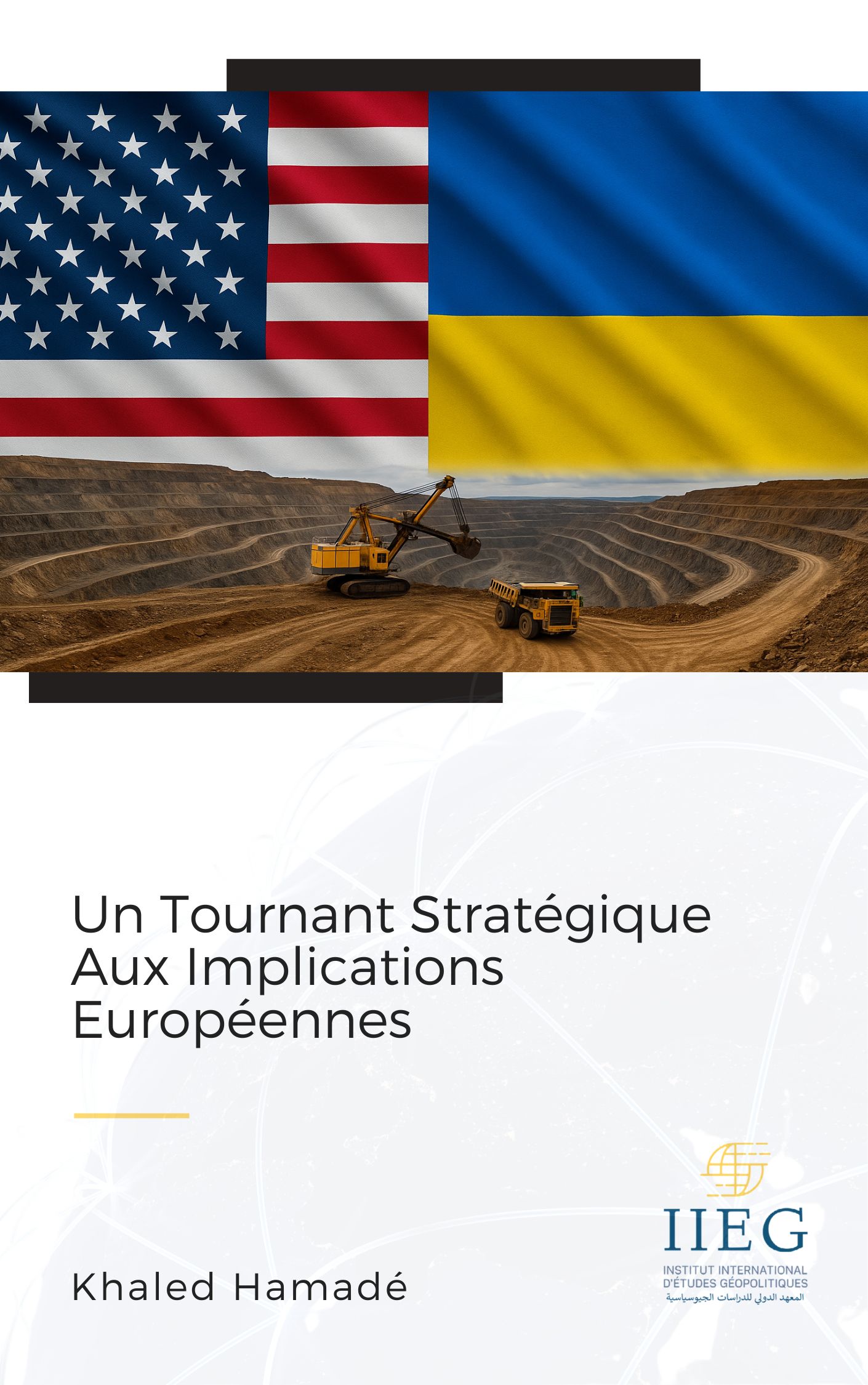
A strategic turning point with European implications
Khaled Hamadé
IIEG Expert
An agreement with strategic contours
The agreement stipulates the creation of a joint investment fund, with equitable sharing of revenues from future mining projects, such as lithium, titanium, uranium and rare earths. Ukraine retains full ownership of its natural resources and infrastructure, but the profits generated will be reinvested in the reconstruction of the country for the first ten years. After 2035, dividends can be distributed. However, this agreement does not provide any security guarantees from the United States for Ukraine, and the question of NATO membership will be addressed separately, as part of a future peace agreement with Russia.Reactions and implications for the European Union
The European Union, already engaged in a strategic partnership with Ukraine since 2021, finds itself faced with a complex situation. On the one hand, the agreement offers American companies privileged access to Ukrainian mineral resources, thus strengthening the influence of the United States in the region. On the other hand, Europe fears that this agreement will marginalize its own initiatives and reduce its role in the reconstruction and economic development of Ukraine.
European authorities have expressed concerns about the management of Ukraine's natural resources and stressed the need for close cooperation between the EU and Ukraine to ensure sustainable and equitable exploitation of these resources.
The European Commissioner for Industrial Strategy, Stéphane Séjourné, has proposed an alternative agreement, highlighting a “win-win” approach that prioritizes mutual interests and sustainability.
Economic consequences for Europe
The agreement between the United States and Ukraine could have several repercussions on the European economy:
1. Limited access to resources:European companies could find themselves excluded from mining projects in Ukraine, reducing their access to strategic resources essential for the energy transition and the technology industry.
2. Increased competition:The increased presence of American companies in Ukraine could intensify competition for European markets, particularly in the energy and technology sectors.
3. Geopolitical uncertainty:The lack of security guarantees from the United States could increase instability in the region, negatively affecting European investments and energy security.
4. Financial pressure:The European Union could be called upon to assume a greater share of Ukraine's reconstruction costs, while the United States appears to favor an approach more focused on direct economic returns.
Future outlook
Faced with these challenges, the European Union will have to adopt a proactive strategy to preserve its economic and geopolitical interests:
-
Strengthen cooperation with Ukraine: Continue and deepen existing partnerships, with an emphasis on sustainability, transparency and inclusiveness in the exploitation of natural resources.
-
Diversify sources of supply: Explore new supply routes for strategic resources, in order to reduce dependence on single and potentially unstable sources.
-
Promote innovation and competitiveness: Invest in research and development to strengthen Europe's position in key sectors of the global economy.
-
Maintain transatlantic unity: Dialogue with the United States to ensure effective policy coordination and avoid divergences that could harm common interests.
Ultimately
Although the agreement between the United States and Ukraine opens new prospects for the reconstruction of Ukraine and access to its natural resources, it also presents considerable challenges for the European Union. A balanced approach, based on cooperation, innovation and solidarity, will be essential to navigate this new geopolitical and economic landscape.