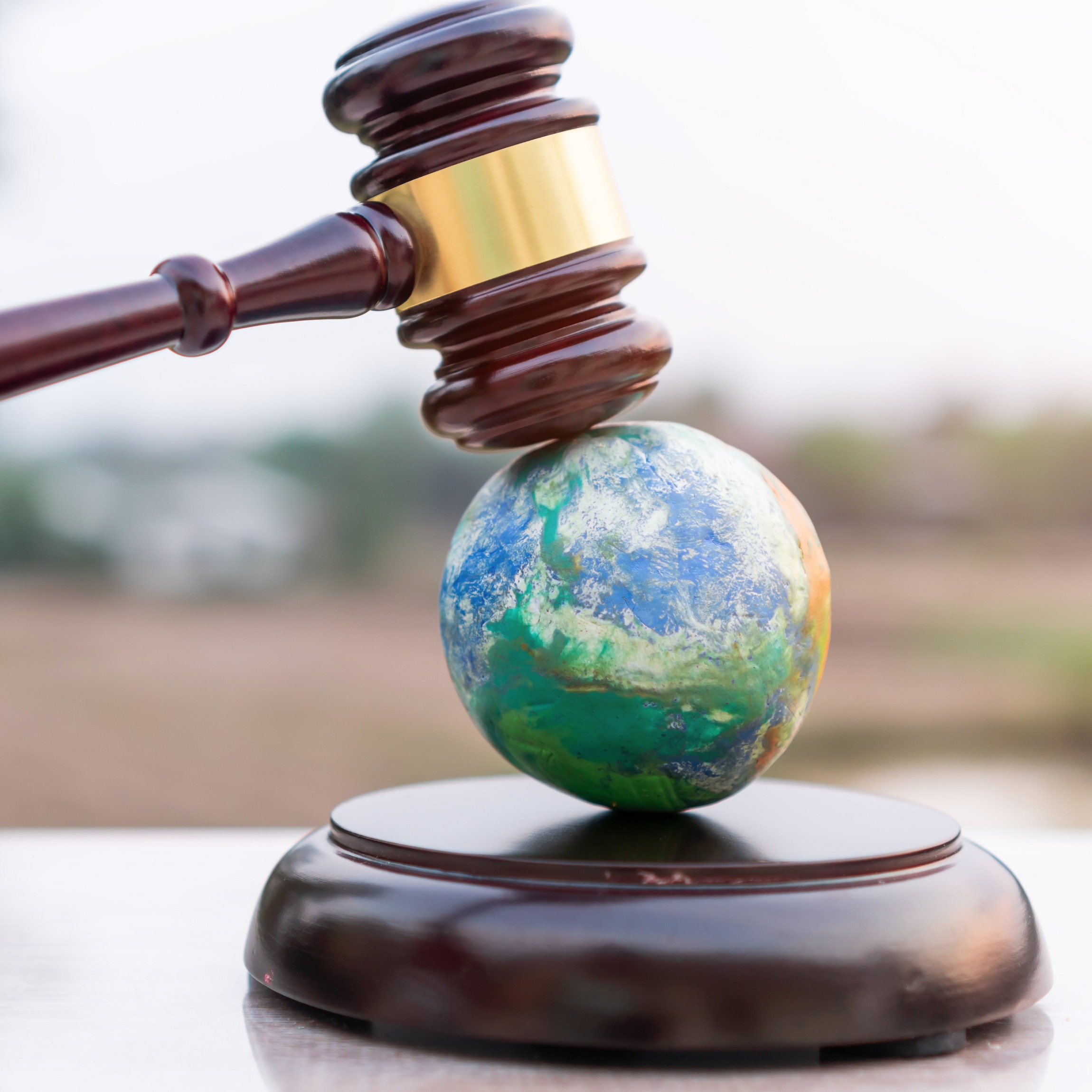
International law occupies a central place in the regulation of relations between states, the preservation of human rights, and the attempt to limit the destructive effects of armed conflicts. However, recent events in the Near and Middle East regions are putting its legitimacy, effectiveness and concrete application to the test.
- The fundamental role of international law today
Despite its flaws, international law continues to represent an indispensable framework, notably through three main functions: limiting violence, regulating the use of force, and holding perpetrators of international crimes accountable.
- a) Limit armed violence
International humanitarian law (IHL), based on the Geneva Conventions of 1949
[1] and their additional protocols, sets clear rules in times of war
[2]:
- The protection of civilians is an absolute principle;
- Indiscriminate attacks are prohibited;
- Prisoners of war must be treated humanely;
- Humanitarian access must be guaranteed to organizations like the Red Cross.
However, in war zones like Gaza or Syria, these principles are often flouted. The use of explosive weapons in densely populated urban environments, strikes on hospitals or prolonged sieges that deprive civilians of access to vital needs are clear violations of IHL.
- b) Regulate the legality of the use of force
International law, notably the
United Nations Charter, strictly limits the use of force. According to Article 51
[3], only
self-defense or an
explicit authorization from the Security Council can justify armed intervention; and how many conflicts, crimes are committed in the name of self-defense!
However, unilateral interventions, such as that carried out by the United States in Iraq in 2003 without a UN mandate, have violated this principle, illustrating the difficulties in making the great powers respect these rules.
- c) Holding perpetrators of serious crimes accountable
international criminal law makes it possible to judge
war crimes,
crimes against humanity and
genocide. The
International Criminal Court (ICC) was created for this purpose by the Rome Statute in 1998. It represents a major step forward in the fight against impunity.
However, his authority is often contested. Countries like the United States, Israel, Russia and Syria refuse to recognize its competence
[4]. Moreover, the ICC is sometimes accused of acting selectively, pursuing mainly African officials while other cases (such as crimes in Palestine or Afghanistan) stagnate or are slowed down.
Ultimately, international law is far from perfect. It is often weakened by the hypocrisy of the great powers, the slowness of judicial mechanisms and the asymmetry in the application of the rules. But despite its flaws, it remains today the only common framework allowing the erection of legal, moral and political barriers against barbarism, violence and arbitrariness. Renouncing this right means agreeing to plunge back into a world where force takes precedence over law, and where justice becomes an illusion. Conversely, believing in it, reforming it and defending it means working for a more humane, more equitable and more stable world order.
The structural limits of international law: between idealism and impotence
International law suffers from an original defect: the absence of a real coercive mechanism. Unlike internal legal systems, it does not have a centralized executive force to impose its decisions. Its implementation is essentially based on the voluntary consent of States. This means that compliance with international standards depends largely on the political will of governments, which can vary depending on the strategic interests of the moment. This dependence makes international norms particularly vulnerable to power struggles and diplomatic hypocrisy.
An emblematic example of this weakness is the United Nations Security Council, the main body responsible for guaranteeing international peace and security. Theoretically, it has binding means to impose its decisions (sanctions, peacekeeping operations, authorization of the use of force). But in practice it is often hamstrung by the veto power of the five permanent members — the United States, Russia, China, France and the United Kingdom. This blocking power, inherited from the Second World War, allows just one of these powers to defeat any resolution contrary to its interests.
This institutional dysfunction regularly prevents crucial actions, particularly in cases of massive violations of humanitarian law or military aggression.
Furthermore, international criminal law, embodied by the International Criminal Court (ICC), also suffers from a lack of coercive power. The ICC has neither police force nor its own means to arrest the suspects it indicts. It depends entirely on the cooperation of States. However, this cooperation is often non-existent, or even openly hostile. Many states, including major powers such as the United States, China, Russia and Israel, do not recognize the jurisdiction of the Court or actively oppose its functioning. This significantly reduces its reach, especially in the most politically sensitive cases
[5].
Another essential limit lies in the instrumentalization of universal legal principles. International law is sometimes accused of being applied selectively, according to geopolitical logic. This reality fuels the discourse of “double standards”, particularly in the countries of the South. When an African leader is prosecuted for war crimes, but those responsible for similar violations in other regions escape prosecution, the legitimacy of the system crumbles. International law, supposed to embody the sovereign equality of States and universal justice, then becomes perceived as a tool of interference or domination.
What if international law collapsed? Assumptions and dangers of a world without rules
Faced with these limits and the increasing fragility of the international system, certain researchers and analysts are asking a radical question: what would happen if international law completely collapsed? If treaties lost their force, if international jurisdictions were no longer recognized, if common standards disappeared, what alternatives would remain for organizing international life? Several scenarios are emerging, but none seems capable of ensuring a stable, just and peaceful order.
The first hypothesis would be a return to absolute sovereignty, in which each State would act freely according to its national interests alone, without feeling bound by external commitments. This model recalls the anarchy of the pre-20th century Westphalian system. It would mean the end of all multilateral regulation, and would open the way to permanent conflicts, unstable alliances, and increased competition for resources.
A second alternative would be that of the law of the strongest. In a world where law is disappearing, military, economic or technological force becomes the only means of regulation. This would strengthen great powers at the expense of weaker states, and undermine the protection of civilian populations, minorities and refugees. This dystopian model would bring the international system closer to a Hobbesian chaos, where violence is omnipresent and security depends solely on power.
A third possible scenario would be the emergence of compartmentalized regional systems, such as the European Union, the African Union, or the BRICS. Each bloc would develop its own normative framework, without global coordination. Although this may provide some local stability, this fragmentation would undermine the coherence of international law and reinforce legal inequalities depending on the region of the world in which one is located. The universality of rights and international solidarity would become inaccessible.
Finally, a final hypothesis, still marginal but worrying, would be the installation of private or technological governance, dominated by large transnational companies and digital platforms. In a globalized world, these actors sometimes have more influence than the States themselves. They could impose economic, security or social standards beyond any democratic control. Such a model would widen inequalities and roll back fundamental rights.
[1] “Amnesty International. 2024. International Humanitarian Law. Https://Www.Amnesty.Org/Fr/What-We-Do/International-Law/”.
[2] “International Committee of the Red Cross (ICRC). 2024. The Geneva Conventions of 1949. Https://Www.Icrc.Org/Fr/Document/Les-Conventions-de-Geneve-de-1949.,”.
[3] “Charter of the United Nations, Chapter VII: Action in Cases of Threats to the Peace, Breach of the Peace and Acts of Aggression - Article 51,”.
[4] “Https://Www.Icc-Cpi.Int/about/How-the-Court-Works,”.
[5] “Institute of International and Strategic Relations (IRIS). 2024. Studies on International Law and Contemporary Crises. Https://Www.Iris-France.Org/.,” n.d.
[6] “United Nations. 2024. Maintaining International Peace and Security. Https://Www.Un.Org/Fr/Our-Work/Maintain-International-Peace-and-Security.,” n.d.